 Guitar dealer · since 2018
 1 / 13
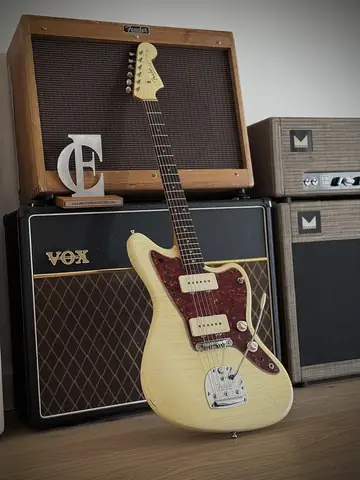
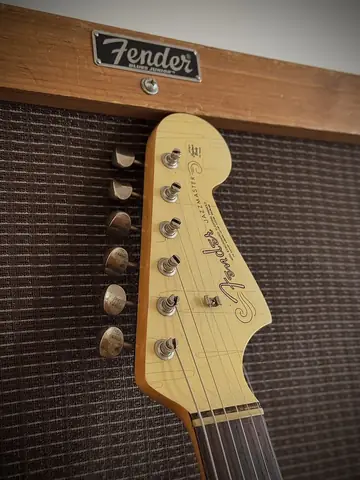
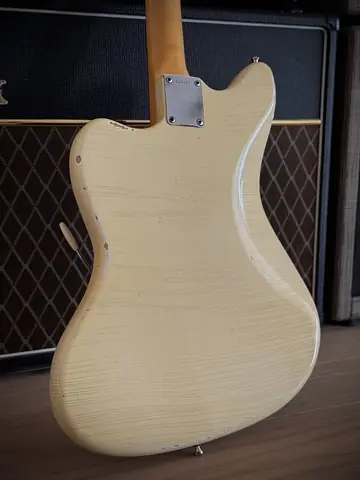
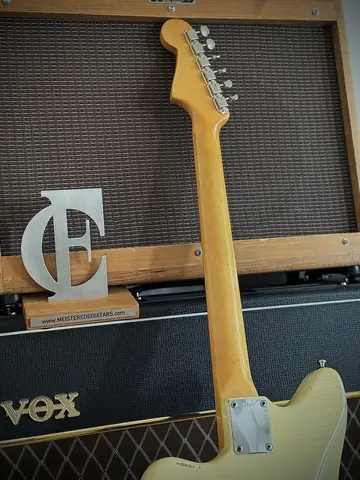
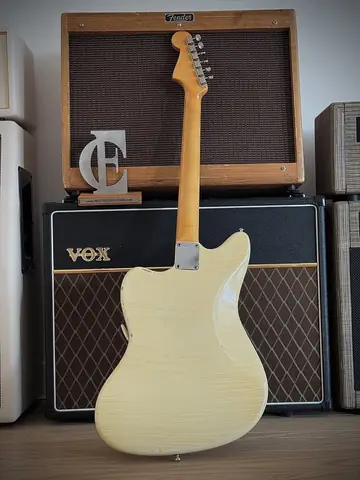
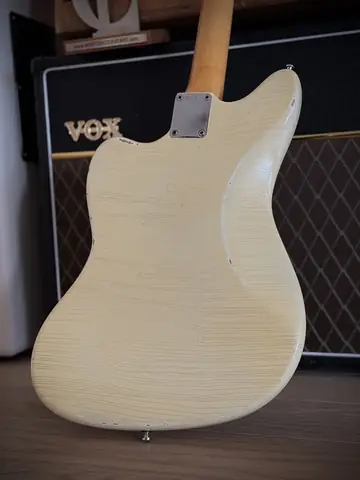
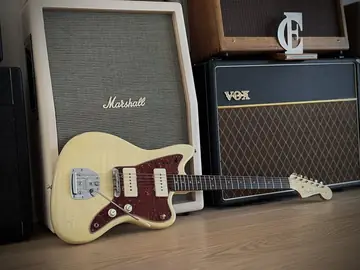
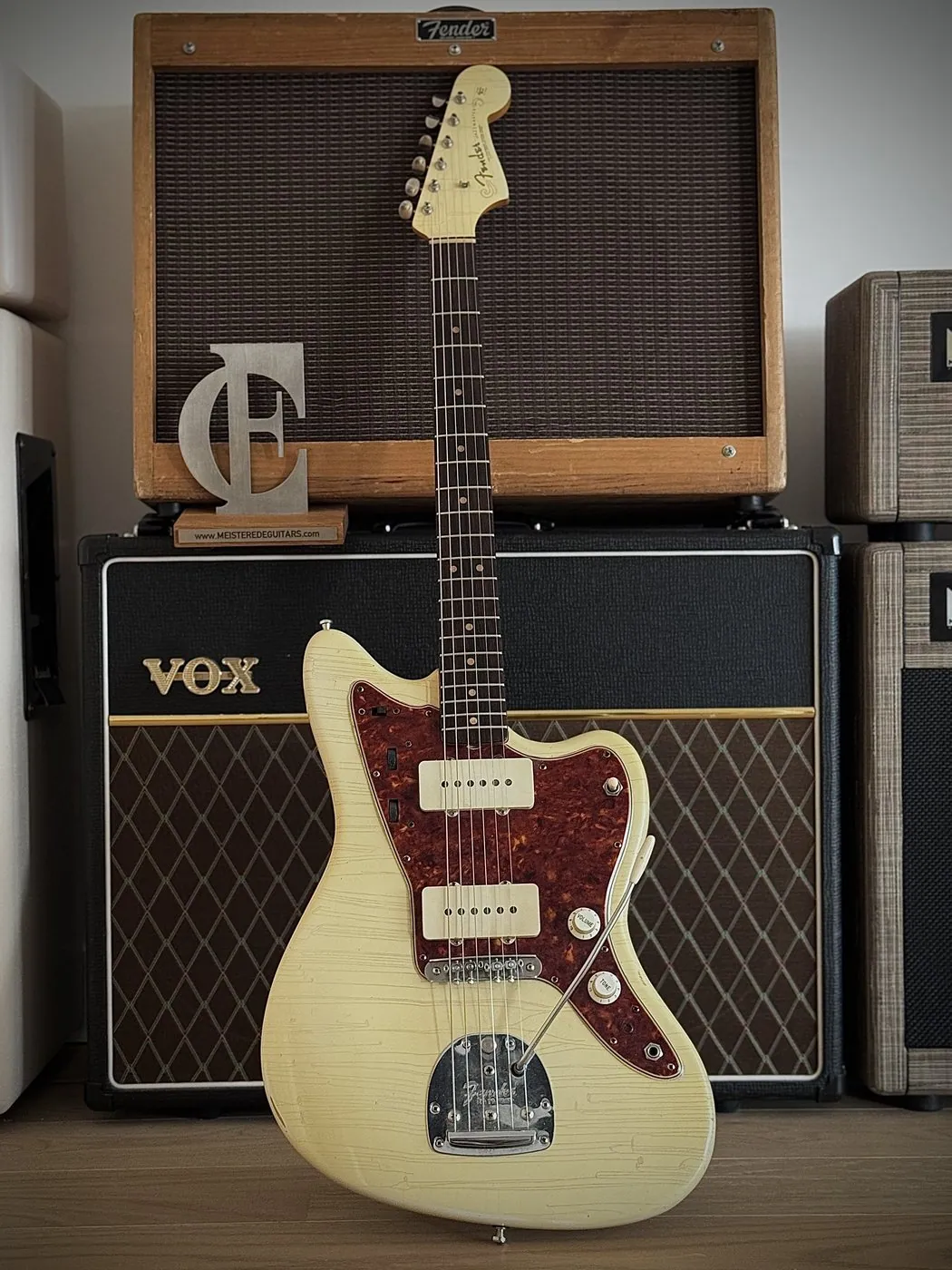
1963 Fender Jazzmaster (Refin by Schindehütte)
Original 1963 Jazzmaster · refinished by Schindehütte Guitars
| Model | Fender Jazzmaster |
|---|---|
| Year | 1963 (vintage) |
| Finish | Refinished by Schindehütte Guitars |
The Jazzmaster has never had an easy time of it. Leo Fender built it in 1958 as a flagship for jazz players, and jazz players almost unanimously ignored it. The surf bands got there first, the indie and alternative crowd followed, and that's precisely why the Jazzmaster is a cult instrument today: it went out and found its own audience.
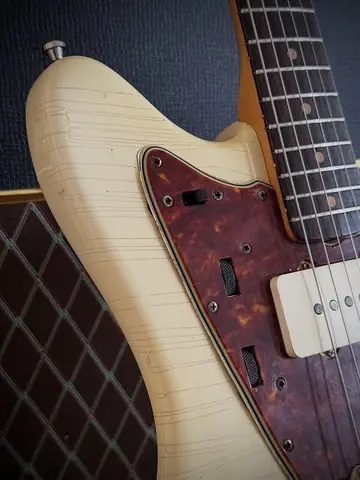
This one is from 1963, right in the middle of the good years. That offset body with its asymmetric waist is still one of the most ergonomic shapes ever drawn. Sitting down it beats any Strat, and standing up it hangs balanced on a strap.
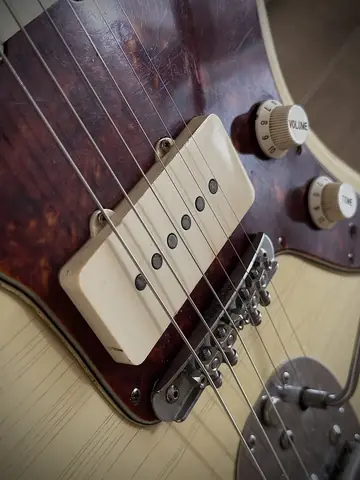
The Jazzmaster's sound is a chapter of its own. Those wide, flat single coils have nothing in common with a Strat's. They're wound flatter and built wider, and that's where the voice comes from: bell-like and broad, with a lovely character of its own up top and a surprisingly fat foundation. Clean it shimmers in three dimensions; with fuzz or overdrive it develops that wilful, almost contrary texture that whole generations of guitarists have ended up chasing.
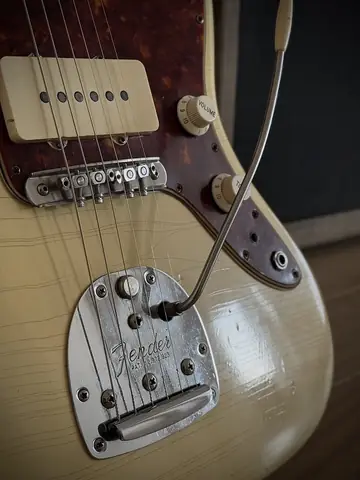
Then there's the rhythm circuit, the second set of controls that runs the neck pickup and gives you a darker, softer voice — one of the more interesting quirks in the Jazzmaster's design.
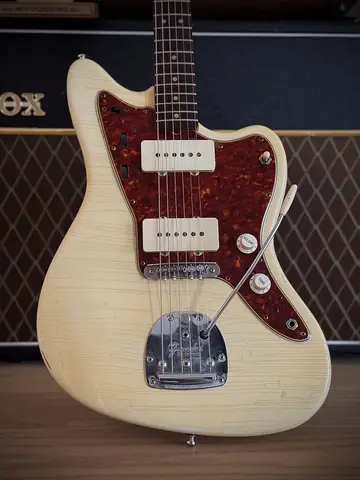
This one was expertly refinished by Schindehütte Guitars, wafer-thin in nitro Nicotine Olympic White. It's so authentic and carefully done that it would pass for an original finish.
A lovely thing for players and vintage lovers alike — no wonder Ede made a “vintage exception” for this one.