 Guitar dealer · since 2018
 1 / 38
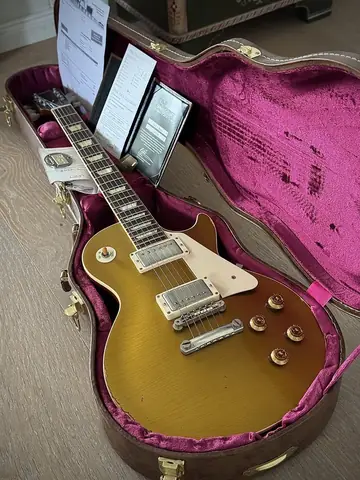
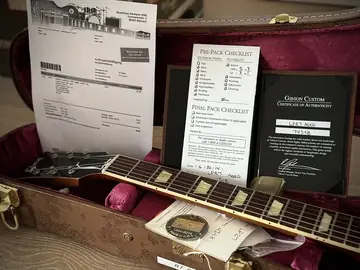
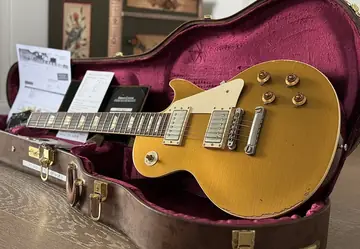
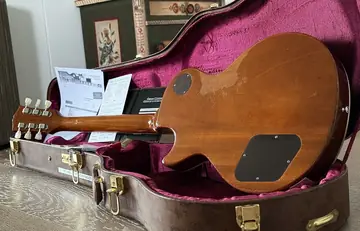
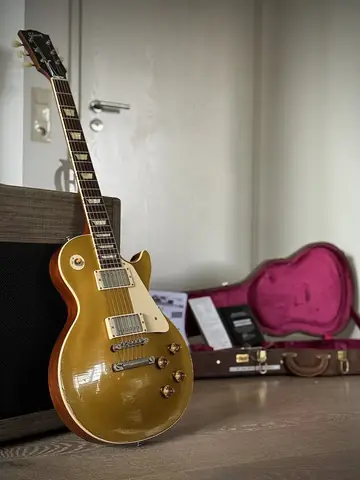

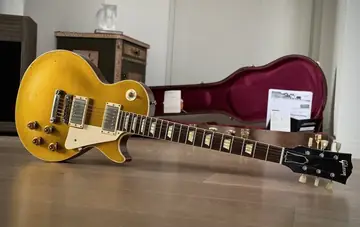
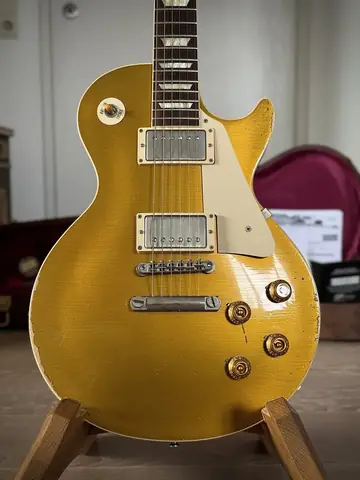
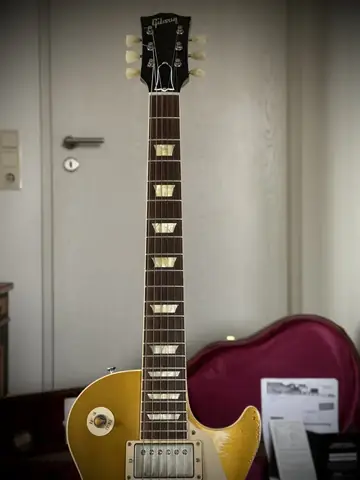
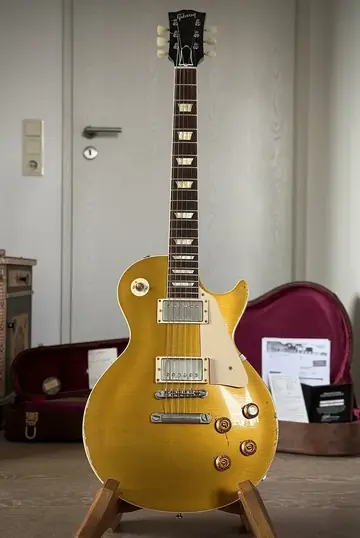
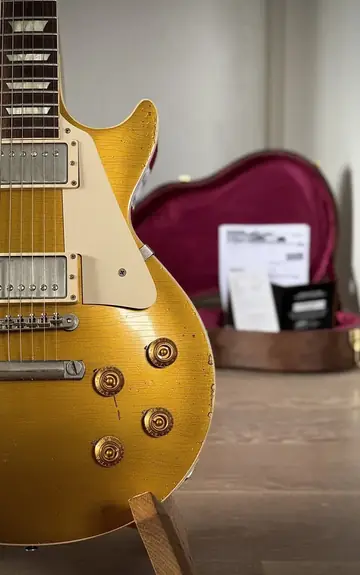
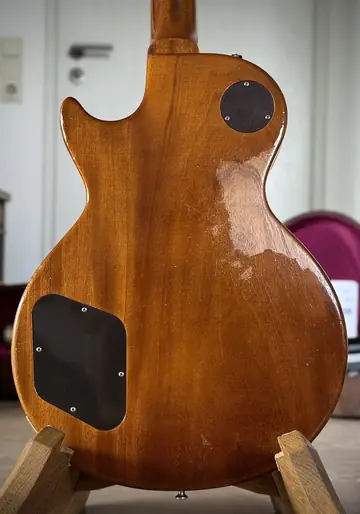
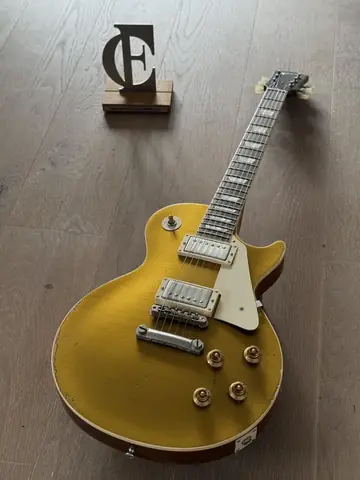
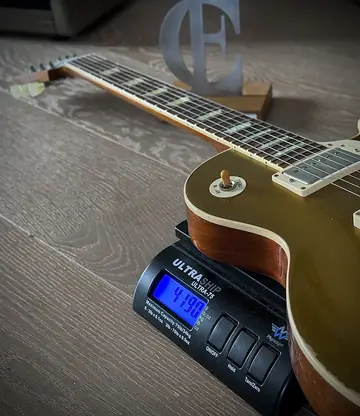
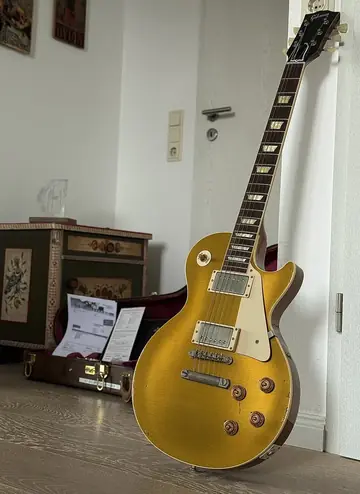
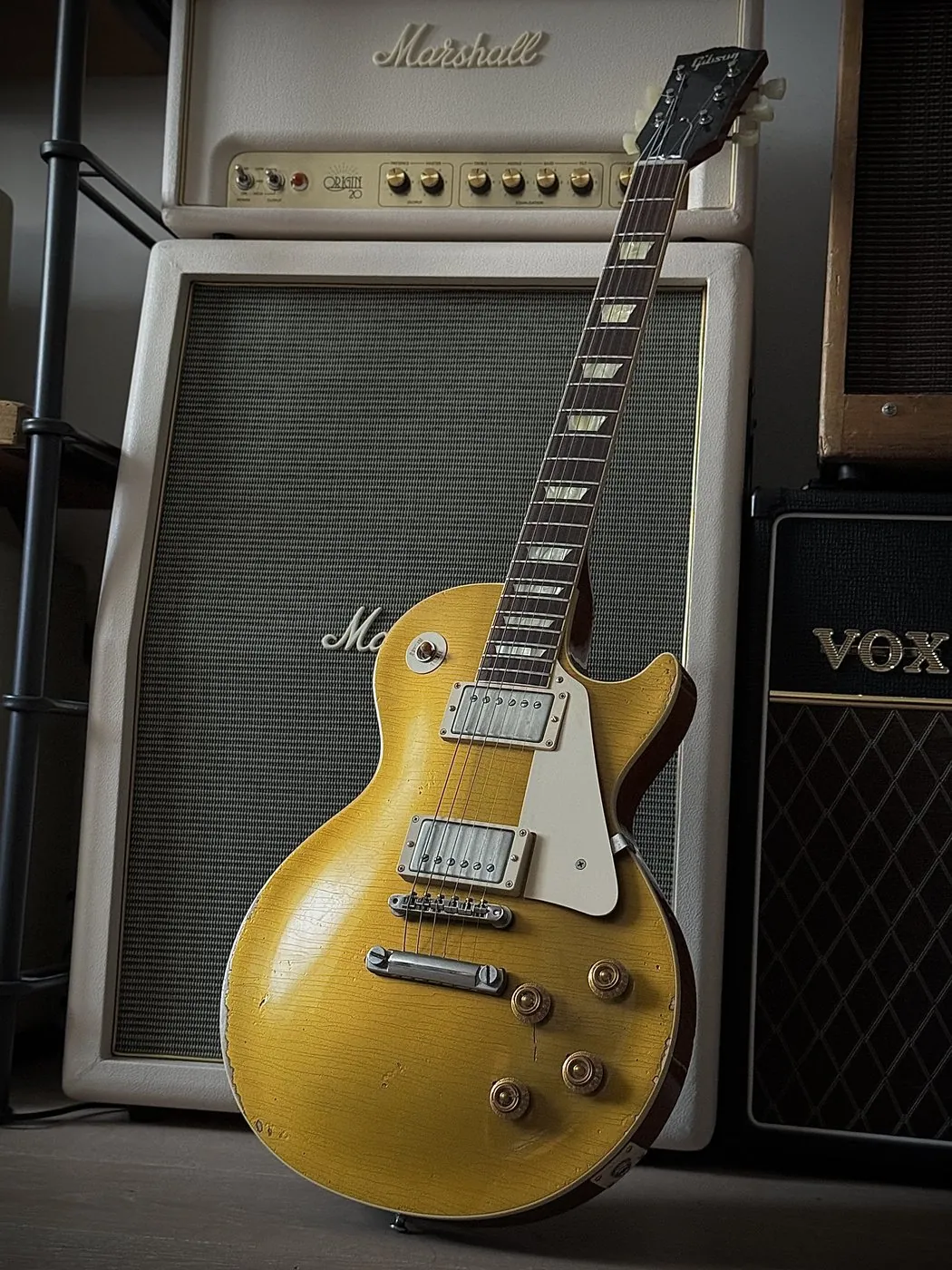
Gibson Custom Shop 1957 Les Paul Goldtop — Heavy Aged (2014 Limited Run)
1957 Les Paul reissue · heavy aged · 2× humbuckers · 2014 limited run
| Model | Gibson Custom Shop 1957 Les Paul Goldtop Reissue |
|---|---|
| Series | Historic Collection · 2014 limited run |
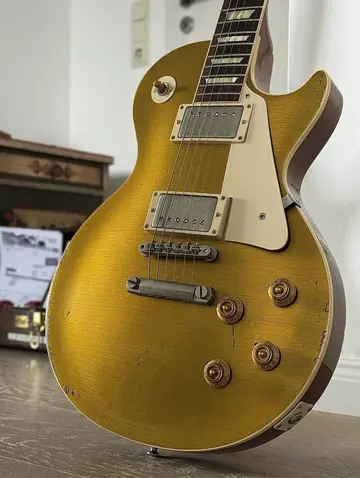
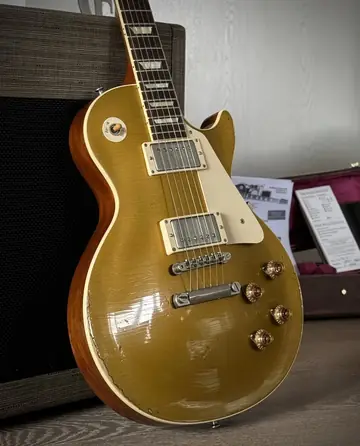
| Finish | Goldtop · heavy aged |
| Body | Mahogany with carved maple top |
| Neck | Rounded 50s profile |
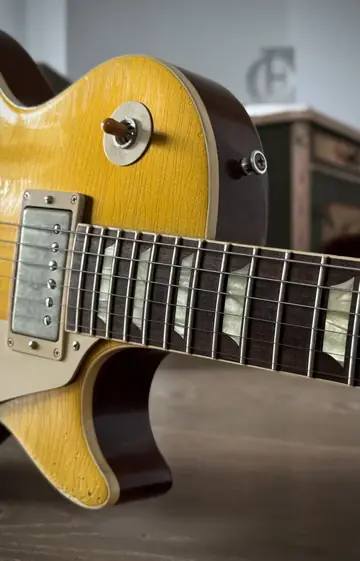
| Fretboard | Rosewood with trapezoid inlays |
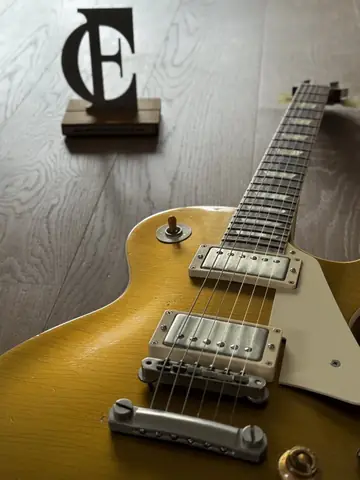
| Pickups | 2× humbuckers (PAF style, '57 spec) |
| Hardware | Tune-o-matic bridge & stopbar |
The 1957 Les Paul Goldtop marks one of the most important turning points in the history of the electric guitar. That year, Seth Lover's humbuckers went into the Les Paul for the first time, and at the same time Gibson moved to the tune-o-matic bridge with a separate stopbar tailpiece. That's the concept that has stood unchanged ever since. Everything that came afterwards is essentially a variation on it.
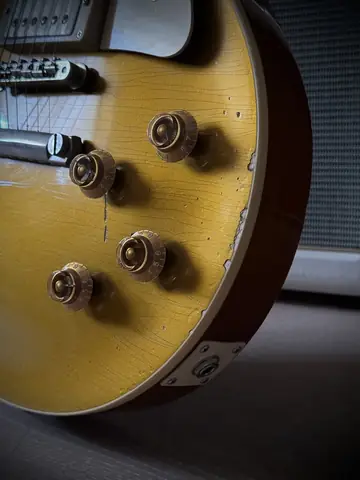
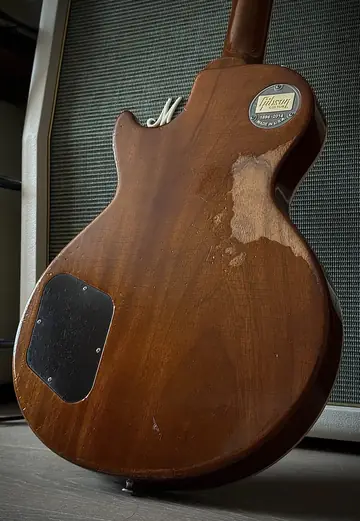
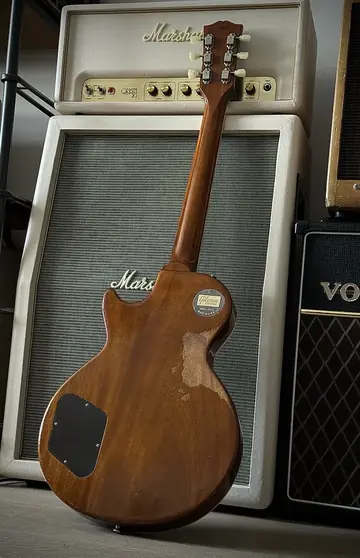
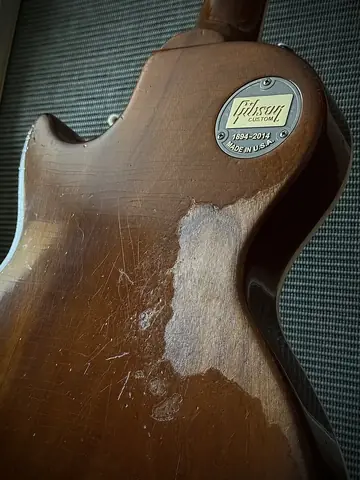
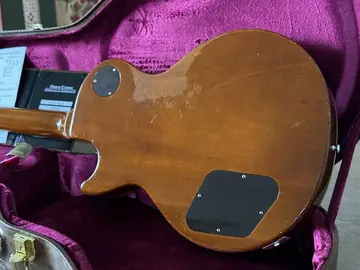
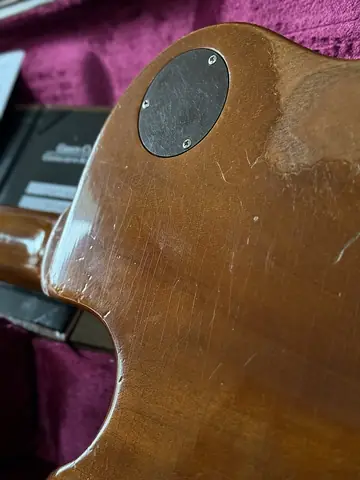
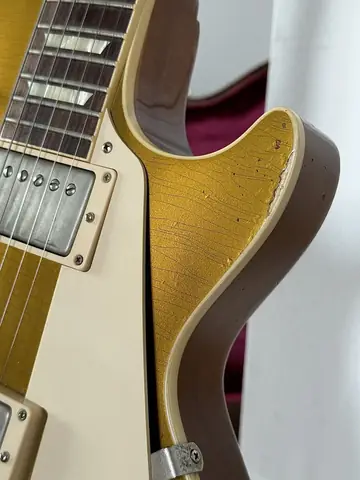
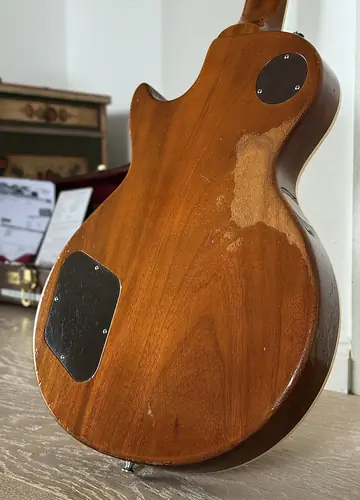
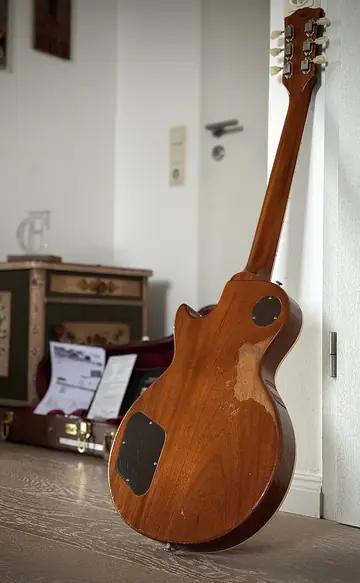
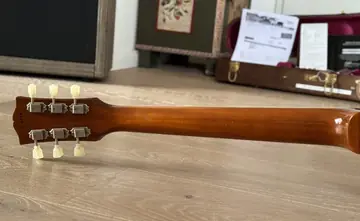
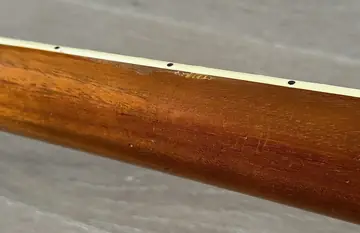
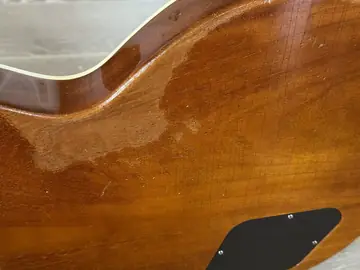
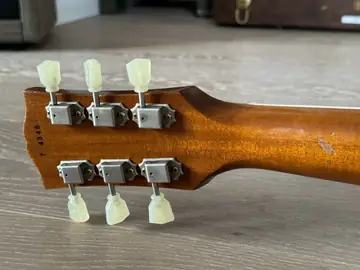
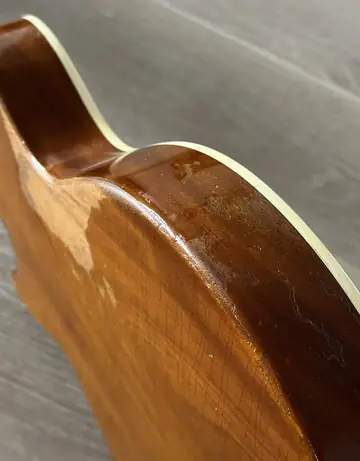
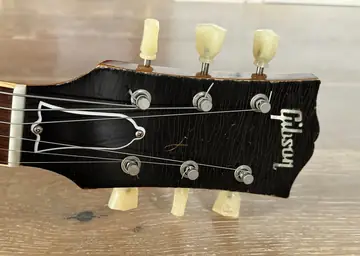
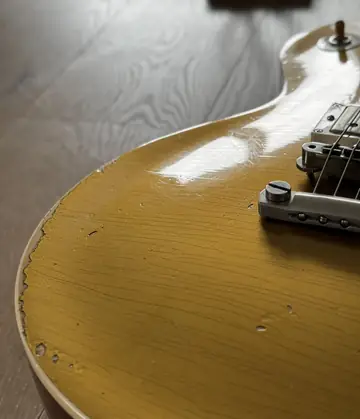
This example comes from a limited Gibson Custom Shop run from 2014, in the sought-after heavy aged version. The difference from a VOS is considerable. Where VOS merely takes the new-guitar shine off, heavy aged goes much further: finish worn away across whole areas in the usual places, fine checking across the top, tarnished and dulled hardware, edges played round. The result is an instrument that looks as though it spent decades on stages and in studios.
That's more than cosmetics. A well-aged instrument feels different. The neck is smooth, nothing sticks, nothing feels factory-fresh, and you take hold of it without the faint caution that comes automatically with a flawless new guitar. For players that's often the deciding factor.
Underneath sits the classic combination: a mahogany body with a glued-on maple top and a mahogany neck in the rounded 50s profile. That construction is the reason for the Les Paul voice. The mahogany gives warmth, body and sustain; the maple top adds the definition and the attack on top. Together they produce a picture that's dense without turning to mud.
The humbuckers are moderately wound on the '57 pattern, and that's exactly what makes them good. They don't generate artificial output but leave the wood room to work. At the neck you get a warm, singing tone with a vocal character; at the bridge it turns wiry and cutting. With some drive comes that creamy saturation and endless sustain you play a Les Paul for in the first place, and roll the volume back and everything opens cleanly up again.
Meister Ede selected this one personally at Musikhaus Hermann and used it on numerous tours with Beatrice Egli.
A limited Custom Shop collector's piece with real playing value, from Ede's Private Stock.